

The Rubrics Building,
Trinity College Dublin
Geothermal Heating
Project Overview
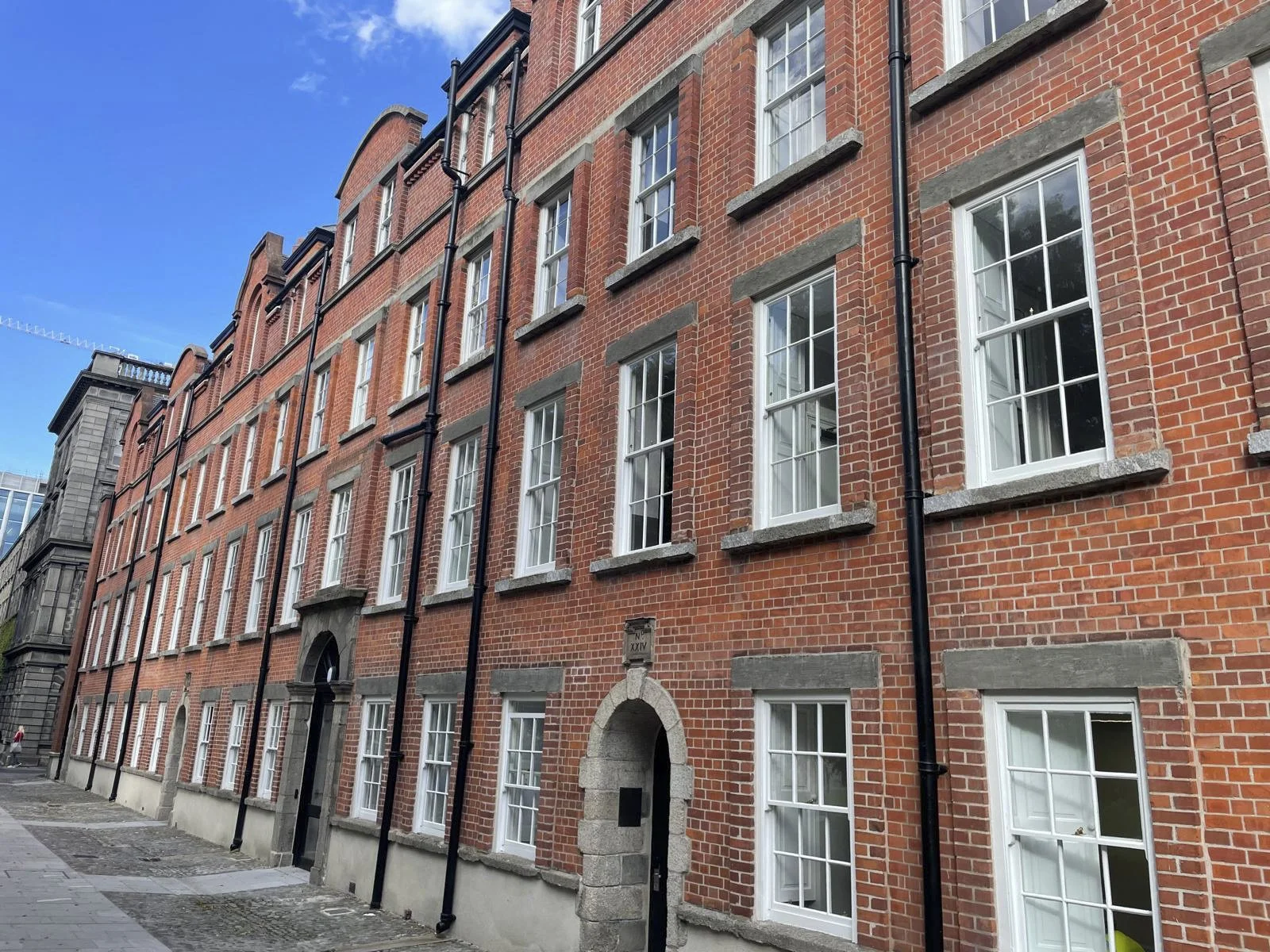
The Rubrics Building is one of Trinity College Dublin's most historic buildings, dating from approximately 1699. Located on the university's campus overlooking New Square, the four-storey, 715m² building underwent an extensive conservation and refurbishment programme to improve its performance while preserving its architectural heritage.
As part of the project, a renewable heating solution was developed using geothermal heat pump technology, demonstrating how modern, low-carbon heating systems can be integrated into historically significant buildings.
The Challenge
As a protected structure and Recorded Monument, the Rubrics Building presented significant challenges in balancing conservation requirements with modern standards of comfort, energy efficiency and sustainability.
The building's age, historic fabric and architectural significance required a carefully considered approach to upgrading its heating infrastructure without compromising its heritage character.
The project also involved integrating renewable heating technology within the constraints of a sensitive city-centre campus environment.
The Solution
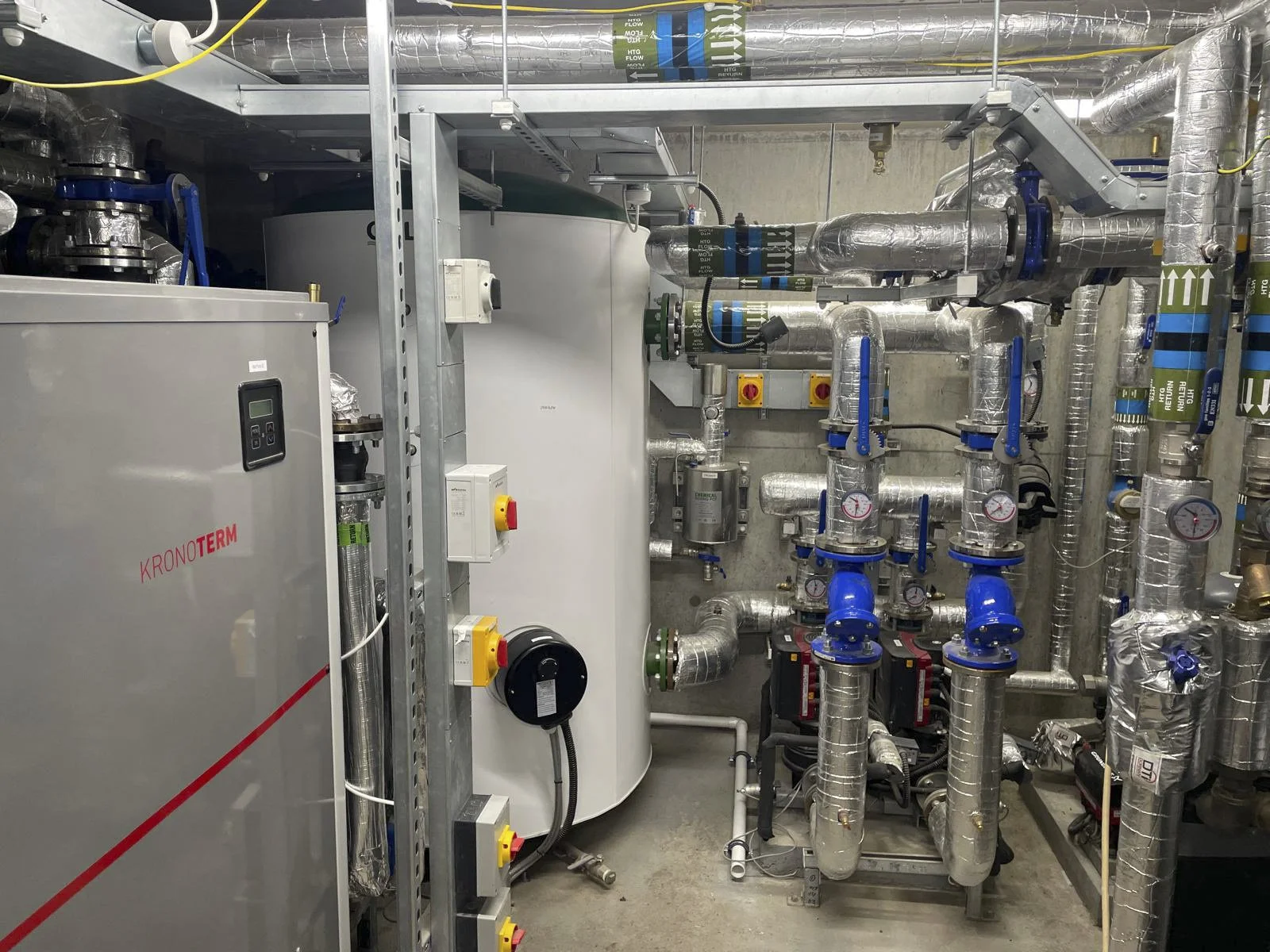
Following a detailed feasibility study, a geothermal heat pump system was selected as the preferred renewable heating solution.
The design incorporated a closed-loop ground collector system comprising 21 vertical geothermal boreholes, each approximately 170 metres deep, installed within the grounds of Trinity College Dublin.
The boreholes provide a renewable ground-source energy supply for the building's heating and domestic hot water requirements.
The system was designed to work alongside the wider conservation and energy improvement programme, supporting the building's transition towards more sustainable operation while respecting its historic significance.
The Outcome
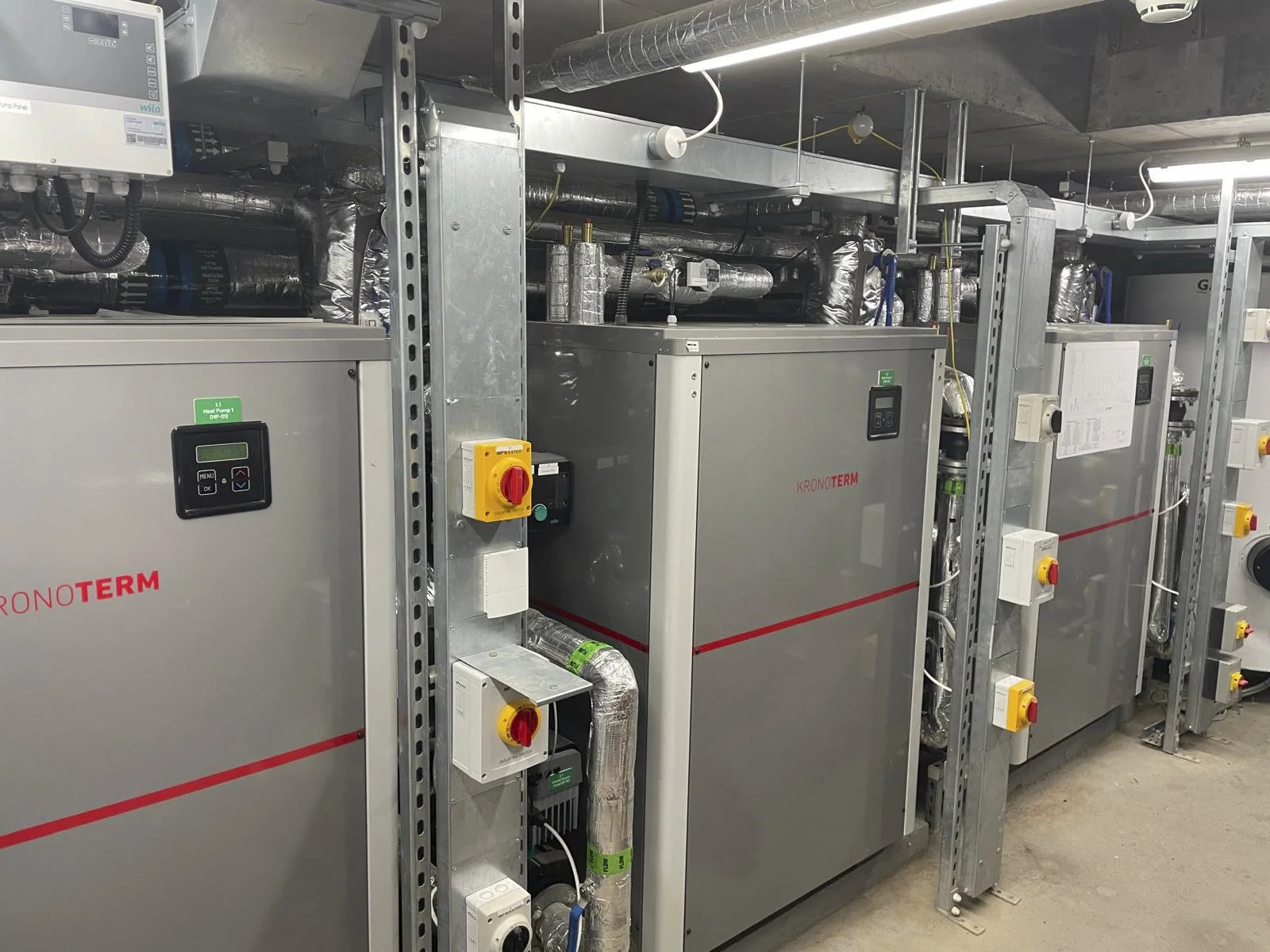
The Rubrics Building project demonstrates the potential for geothermal heat pump technology to support the sustainable refurbishment of protected and heritage buildings.
By combining ground-source heating with improvements to the building fabric and energy performance, the project provides a valuable example of how historic properties can be adapted for modern use while reducing their reliance on conventional heating technologies.
It also highlights the importance of careful planning, specialist engineering and collaboration when delivering renewable heating solutions in architecturally sensitive environments.